KINGDOM: || PHYLUM: || CLASS: || ORDER: || FAMILY:报春花科 PRIMULACEAE || GENUS:
《中国植物志》|| 报春花科 PRIMULACEAE ||报春花族 Trib. Primuleae ||报春花属 Primula L.
9. 报春花属——Pramula L.
L. Sp. Pl. ed. 1. 142. 1753, et Gen. Pl. ed. 5. 70. 1754.
草本,多年生,稀二年生。叶全部基生,莲座状。花5基数,通常在花葶端排成伞形花
序,较少为总状花序、短穗状或近头状花序,有时花单生,无花葶;花萼钟状或筒状,具浅齿或深裂;花冠漏斗状或钟状,喉部不收缩,筒部通常长于花萼,裂片全缘、具齿或2裂;雄蕊贴生于冠筒上,花药先端钝,花丝极短;子房上位,近球形,花柱常有长短2型。蒴果球形至筒状,顶端短瓣开裂或不规则开裂,稀为帽状盖裂;种子多数。
属的模式种:黄花九轮草P. veris L.
本属约有500种,主要分布于北半球温带和高山地区,仅有极少数种类分布于南半球。沿喜马拉雅山两侧至云南、四川西部是本属的现代分布中心。我国有293种21亚种和18变种,主产西南、西北诸省区,其它地区仅有少数种类分布。
本属植物花多艳丽,可栽培供观赏。本世纪初,英、美等国曾多次派人来我国采集本属植物,将种苗运回欧美栽培,成为植物分类学界和花卉园艺界一时之热潮。据统计,英国由我国引入栽培的种类曾多达110余种,其中不少已广泛栽培于欧美各国庭园,并培育出了许多美丽的园艺品种。
报春花属是典型的异花授粉植物,种类繁多,分布甚广,在其演化过程中,无疑存在着种间杂交和平行进化、凑合进化等复杂现象。在目前的知识水平上,我们还不能完全揭示其演化途径和属以下各类群之间的明确亲缘关系。Pax(1889)将本属划分为20个组,但各组的内容非常混杂,界限不清。W. W. Smith和G. Forrest(1928)在Bayley Balf o盯于1913年报春花学术讨论会提出的初步意见的基础上,将本属分为32个组,并用图表的方式表示了各组之间大致的亲缘关系。此后W. W. Smith和H. R. Fletcher(1941-1949)在其专著《The Genus Primula》中又作了部分修正,保留了31个组。H. G. Braun (1932) 对100余种报春花属植物作了染色体的计数和观察。他对染色体类型的划分大体上与W. W. Smith的分组相吻合。Schott(1851)首次将本属分为2个亚属,但仅为少数学者所采纳。P. Wendelbo (1961)意欲更好地表达各组之间的亲缘关系,将W. W. Smith等划分的31个组归纳为7个亚属。他把少数较易区分的组升级为亚属,剩下近半数的组全部归入他庞杂的Subgenus Aleuritia中,远未能达到反映亲缘关系的目的。事实上,在本属的许多组之间均存在性状交叉、重叠现象,其分化尚未达到亚属水平。为了避免过多的人为分类阶元和名称,本志在属下只采用了“组”一个等级,在排列上则尽量将亲缘关系较近的组放在一起。但根据P. Wendelbo的意见,按照命名法规,对一些组的名称作了订正,同时对个别组的概念作了一些修改,因此少数种类的隶属亦有更动。
我国所产的种类共分为下列24组。
《Flora of North America》|| Primulaceae || || Primula
5. Primula Linnaeus, Sp. Pl. 1: 142. 1753; Gen. Pl. ed. 5, 70. 1754.
Primrose [Latin primus, first, and -ulus, diminutive alluding to early spring blooming]
Sylvia Kelso
Herbs perennial [annual], (evergreen and semiwoody in P. suffrutescens), rarely mat-forming (P. suffrutescens; sometimes stoloniferous in P. nutans), slightly to moderately succulent. Rhizomes present, roots fibrous. Stems (scapes) ascending, simple. Leaves in single rosette (multiple rosettes in P. suffrutescens), simple; petiole absent or obscure, winged or not; blade linear, broadly lanceolate, oblanceolate, oblong-obovate, rhombic, or elliptic to cuneate or spatulate, base tapered or rounded and abruptly narrowed, margins entire, dentate, or denticulate, apex toothed, acute, obtuse, rounded, or spatulate, surfaces glabrous or rarely hairy (P. veris), hairs simple. Inflorescences umbels, 2-25+-flowered, involucrate, [racemes or spikes] or solitary flowers; bracts 1-5. Pedicels erect, spreading, arching, nodding, arcuate, or slightly reflexed. Flowers often heterostylous, sometimes homostylous; sepals 5, green, calyx broadly campanulate to cylindric or urceolate, ± 5-angled, weakly keeled or not keeled, glabrous, pilose, or puberulent, lobes not reflexed, length 0.5-1 times tube; petals 5, lavender, magenta, pink, rose, violet, white, or yellow [red], corolla campanulate, lobes not reflexed, length 1-2 times tube, apex rounded; stamens included; filaments distinct; anthers connivent. Capsules globose, cylindric, or ellipsoid, valvate, dehiscent to 1/3 length. Seeds 10-100+, brown, ovoid or oblong, somewhat 4-angled, reticulate or vesiculate. x = [8,] 9, [10,] 11, [12].
Species ca. 500 (20 in the flora): North America, Mexico, Central America, South America, Eurasia, Africa (Ethiopia); mostly north-temperate.
Primula is widely distributed throughout Asia and Europe and has comparatively few representatives in North America. Relatively few taxa are circumboreal or widespread in Eurasia; most species of Primula have relatively restricted ranges. Certain geographic areas, e.g., the Himalayas and the European Alps and certain sections of the genus are remarkable for the many narrowly endemic taxa they encompass.
Systematic treatments of Primula have been based on multiple aspects of cytology, anatomy, morphology, and, more recently, molecular studies, which provide a foundation for division of the genus into well-defined sections, five of which occur in North America. Although sections are relatively discrete in Primula, specific and infraspecific delineation has been less distinct due to morphological plasticity. Primula species are best distinguished with a combination of characteristics rather than a single diagnostic attribute.
Broadly distributed, morphologically variable species such as those in Primula are typically accompanied by an array of infraspecific nomenclature. T. F. Stuessy (1990) suggested that subspecific status is appropriate when obvious morphological divergence with a cohesive geographical pattern exists. In comparison, few or intergrading morphological distinctions accompanied by allopatric or peripatric geographic distributions should be treated at the lesser rank. Although some taxonomists recognize only a single infraspecific rank, an argument can be made that it may be appropriate to recognize both subspecific and varietal ranks. In Primula, different types of reproductive and morphological divergence provide examples.
In Primula, distyly and homostyly offer one context for distinguishing between taxa. The distylous flowers are often cited as a classic example of heterostyly via pin (long-styled) and thrum (short-styled) flowers. These prominent characteristics have critical taxonomic, reproductive, ecological, and evolutionary implications (S. Kelso 1992b; A. J. Richards 2003). When such clear distinction occurs in conjunction with morphologic and geographic integrity, taxonomic recognition is warranted. In some cases (e.g., P. pumila and P. tschuktschorum), distylous and homostylous taxa are separated as species when accompanied by reliable morphologic differences and little sympatry. When distylous and homostylous taxa lack consistent morphologic divergence but do demonstrate allopatric distributions, the rank subspecies is applied (e.g., P. cuneifolia subspp. cuneifolia and saxifragifolia). A third level of variation also occurs in Primula: taxa that are consistently distylous but demonstrate intergrading morphologic and geographic distinction. The P. cusickiana complex provides an example of this kind. Because the taxa are evolutionarily significant units (N. H. Holmgren and Kelso 2001) but lack the clear separation seen elsewhere in the genus, the rank variety is used.
Even in its most traditional circumscription, as followed here, Primula has about 500 species. Molecular data have elicited divergent opinions about the merits of a more inclusive generic concept that would subsume other long-recognized genera (including Dodecatheon); "Primula" would become larger, encompassing substantial variation in morphological, structural, cytological, reproductive, and developmental characters. Alternatively, one might subdivide Primula into at least three to six segregate genera from current subgenera if distinctive clades representing sections of Primula or traditional taxa like Cortusa, Dionysia, or Dodecatheon are recognized. Views on inclusive or segregate generic concepts will continue to be debated as additional sequence information becomes available.
Because infrageneric groupings may ultimately play some role in the debate and are readily identified with consistent characteristics, the two subgenera and five sections represented in North America are discussed below.
Subgenus Aleuritia (Duby) Wendelbo includes three sections. Section Aleuritia Duby (formerly sect. Farinosae Pax) is distinguished by x = 9, revolute leaf vernation, common presence of farina or farinipotent glands on glabrous vegetative parts, relatively thin leaves without clear petioles, leaf blades lanceolate to spatulate, notched or cleft corolla lobes that are white or shades of violet to pink, elliptic to somewhat cylindric capsules, and reticulate seed coats that lack flanged edges. This is one of the larger sections, occurring across Asia, Europe, and North America (species 1-8 below) with disjunct representatives in South America. Introgression and possible multiple origins of some of the polyploids appear to be common; phylogenetic relationships with closely related European species are complex and not yet fully clarified (A. Guggisberg et al. 2006).
Section Armerina Lindley is distinguished by x = 11, revolute leaf vernation, the presence of articulated hairs on some vegetative parts, notably the calyx, plants without farina or farinipotent glands, thin, distinctly petiolate leaves with rounded blades, notched corolla lobes that are white or lavender in North American species (to pink or yellow elsewhere), narrowly cylindric capsules, and obscurely reticulate seed coats that lack flanged edges. Primula nutans and P. egaliksensis are the North American members of sect. Armerina. The latter is an intersectional hybrid with the morphology of sect. Armerina and maternal parentage in sect. Aleuritia.
Section Crystallophlomis (Ruprecht) Federov (formerly sect. Nivales Pax) is distinguished by x = 11, revolute leaf vernation, sessile, indistinctly petiolate leaves, somewhat thick or firm, entirely glabrous blades, with or without farina, rose-magenta corollas (in our species, also purple, white or yellow elsewhere), with usually entire lobes, cylindric capsules, and vesiculate seed coats lacking flanged edges. Primula tschuktschorum and P. pumila are the North American members of sect. Crystallophlomis.
Subgenus Auriculastrum Schott includes five sections. Analyses of chloroplast DNA indicate that, in addition to the sections discussed here (and one not represented in North America), subg. Auriculastrum also encompasses sect. Auricula of the European mountains and the Dodecatheon clade [sect. Dodecatheon (Linnaeus) Mast & Reveal] (A. R. Mast et al. 2004; Mast and J. L. Reveal 2007). Section Cuneifolia Balfour is distinguished by x = 11, involute leaf vernation, sessile to obscurely petiolate leaves, blades succulent, wedge-shaped, with broad apical teeth, presence of nonfarina-producing glands on vegetative and reproductive parts, rose-magenta or white (in a Japanese species) corollas with notched lobes, globose capsules, and reticulate seeds with flanged edges. Primula cuneifolia and P. suffrutescens are the North American members of sect. Cuneifolia. The latter, an evergreen, mat-forming species endemic to the Sierra Nevada of California, is sometimes placed into its own monotypic sect. Suffrutescens A. J. Richards.
Section Parryi W. W. Smith is characterized by x = 22, involute leaf vernation, occasional white farina, leaves with obscure petioles, blades thick, glabrous, usually with relatively few marginal teeth, corollas that are usually magenta to bluish or rose-pink, rarely white, with cleft lobes, cylindric capsules, and seeds without flanged edges. This section includes five tetraploid species (species 15-19 below) endemic to the Great Basin and central Rockies, with outliers of P. rusbyi also occurring in Mexico and, reportedly, the mountains of northern Guatemala. Distribution south of the United States border is unclear at present.
Section Primula is marked by x = 11, revolute leaf vernation, lack of farina, leaves with broadly winged petioles, blades decurrent, reticulate, rough-hairy, thin, and becoming membranous, yellow corollas with notched lobes, often yellow, ovate capsules, and minutely vesiculate seeds lacking flanged edges. Primula veris, a horticultural import native in Europe, is the type for Primula and would be the only species in North America to retain that name in a taxonomic scheme with narrowly segregate genera.
The longstanding popularity of Primula with gardeners has led to occasional localized establishment of horticultural species, particularly in and around abandoned gardens and old house sites. Some of these individuals apparently persist but do not spread and only rarely become naturalized. These species are easily recognized by unusual floral colors (typically yellow or shades of red to purple-black) and broad leaf blades, characteristics that none of our native North American species share, and by their proximity to anthropogenic habitats. Of the various horticultural entities popular here that have become at least temporarily established, P. veris is the most widely distributed. Other records describe plants under the names "P. anisodora" (robust plants smelling of anise, with corolla color typically red to deep purple-black, but also ranging from red to golden in cultivars) or "P. japonica," one of the candelabroid primroses with multiple whorled inflorescences and typically red-purple corollas. Both taxa have numerous cultivars and are often deliberately hybridized to produce unusual forms. The popular "polyanthus" primroses (horticulturally known as "×polyantha") are hybrid cultivars of P. veris and P. vulgaris.
In the key below, corolla colors refer to typical coloration in living plants; sometimes corolla colors can become more intense or change from magenta or rose to a shade of deep purple. Age of specimens and drying regimen also affect colors in herbarium specimens; farina (a waxy exudate from bulbous or short-stipitate glands) that is yellow on living plants can lighten in age and flower color may fade substantially. White mutants are not uncommon in any of the species with colored corollas.
Phenologic plasticity is expected in Primula: it is common for leaves and scapes to elongate considerably; most species begin flowering when scapes are very short; pedicels also lengthen and stiffen at the end of anthesis. Farina typically appears on abaxial leaf surfaces, scapes, and calyces; it is especially prominent in young plants, and usually becomes less abundant later; in normally farinose species, anomalous efarinose individuals and populations can occur. Primulas are also typically sensitive to ecological conditions; habitat or climatic conditions that limit or provide excess of either moisture or nitrogen can produce effects such as dwarfing, luxuriance, or alteration in flower number in most species.
Descriptions in the key refer to the most typical aspect of the species at the height of anthesis. Numerical order of the species is alphabetical within sections.
SELECTED REFERENCES Fernald, M. L. 1928d. Primula sect. Farinosae in America. Rhodora 30: 59-77. Guggisberg, A., G. Mansion, S. Kelso, and E. Conti. 2006. Evolution of biogeographic patterns, ploidy levels, and breeding systems in a diploid-polyploid species complex of Primula. New Phytol. 171: 617-632. Halda, J. J. 1992. The Genus Primula in Cultivation and the Wild. Denver. Kelso, S. 1987. Primula tschuktschorum and Primula eximia (Primulaceae, sect. Crystallophlomis): A distylous species and its homostylous relative from the Bering Strait region, Alaska. Brittonia 39: 63-72. Kelso, S. 1991. Taxonomy of Primula sects. Aleuritia and Armerina in North America. Rhodora 93: 67-99. Kelso, S. 1991b. Taxonomy and biogeography of Primula sect. Cuneifolia (Primulaceae) in North America. Madroño 38: 37-44. Richards, A. J. 2003. Primula, ed. 2. Portland. Smith, W. W., G. Forrest, and H. R. Fletcher. 1977. The Genus Primula. Vaduz. [Pl. Monogr. Repr. 11.] Williams, L. O. 1936. Revision of the western primulas. Amer. Midl. Naturalist 17: 744-748.
《云南植物志》|| 报春花科 Primulaceae ||报春花科 Primulaceae ||报春花属 Primula Linn.
3.报春花属 Primula Linn.
通常为多年生草本。叶基生,有柄或无柄,全缘或具深、浅不等的齿或裂片,形成莲座状叶丛。花显著,颜色多样,5基数,通常为二型花,稀同型;花序伞形、短穗状、近头状,稀为总状花序,生于花葶端,有时花单生出自叶丛;花萼钟状或筒状,深或浅齿裂,有时裂齿先端复具齿;花冠漏斗状或钟状,喉部不收缩,有或无环状附属物,筒部长于花萼,裂片全缘或2裂,有时具齿;雄蕊5,贴生于冠筒,在二型花中,雄蕊或着生冠筒基部或在冠筒中部、上部,花丝短,花药顶端钝;子房近球形,花柱在二型花中有长、短之别。蒴果球形或筒状,顶端短瓣开裂或不规则开裂。种子多数。
本属400—500种(《中国植物志》,1990年记载为500种,D. J. Mabberley,1996年记载为400种)。主产于北半球温带和高山地区,其现代分布中心在东喜马拉雅至中国西南高山,有极少种类分布南半球。我国有296种、20亚种、18变种,主产西藏、云南、四川,其他省区所产甚少或较少。云南有126种、8亚种、4变种,主要分布于西北部高山。
本属植物花色丰富而绚丽,为著名观赏植物,已培育出极多园艺品种在国内外广为种植。
本属植物的花有同型花,即在同一种内,雄蕊和花柱在花冠内高度一致,但多数种为异型花,即在同一种内既有长花柱短雄蕊花也有短花柱长雄蕊花,这标志着它们是异花授粉植物。
近代对本属植物分类做出重要贡献的是英国人 W. W. Smith 和 H. R.Fletcher、我国的陈封怀和胡启明。本志书对云南种类的分组和分种的处理基本依据了他们的研究成果,将云南种类归为19个组。
《Flora of China》|| Primulaceae || ||报春花属 Primula
8. Primula Linnaeus, Sp. Pl. 1: 142. 1753.
报春花属 bao chun hua shu
Credit: Harvard University Herbaria
Herbs perennial, rarely annual, glabrous or pubescent, often farinose. Leaves simple, forming a rosette. Flowers usually heterostylous with pin (with longer styles) and thrum (with shorter styles) flowers; sometimes homostylous, in umbellate, racemose, subcapitate, or spicate inflorescences on scapes, with bracts; rarely solitary, scapes undeveloped. Calyx campanulate or cylindric, sometimes leaflike, 5-toothed. Corolla tube cylindric, not constricted at throat; limb 5-lobed, spreading or campanulate; lobes 2-cleft, margin entire. Stamens inserted on corolla tube; filaments very short; anthers obtuse. Ovary superior. Capsule globose, ovoid, or cylindric, dehiscing by valves, rarely with an operculum or crumbling; seeds numerous.
Approximately 500 species, mostly indigenous to the N temperate zone, with only a few outliers on the mountainous regions of Africa (Ethiopia), tropical Asia (Java and Sumatra), and
South America. About 300 species are native to China.
Many species are imperfectly known, sometimes collected only once. This is reflected occasionally by missing details on pin or thrum morphology, fruiting characteristics, or ecology. ----------------------------------------------------------------- The 300 species are represented by 24 sections according to C. M. Hu:
1. Sect. Monocarpicae Franchet ex Pax: spp. 1--13.
2. Sect. Obconicolisteri I. B. Balfour: spp. 14--23.
3. Sect. Cortusoides I. B. Balfour: spp. 24--40.
4. Sect. Malvacea I. B. Balfour: spp. 41--47.
5. Sect. Auganthus (Link) Pax ex I. B. Balfour: spp. 48--50.
6. Sect. Pycnoloba I. B. Balfour: sp. 51.
7. Sect. Ranunculoides Chen & C. M. Hu: spp. 52--53.
8. Sect. Primula: sp. 54.
9. Sect. Carolinella (Hemsley) Pax: spp. 55--62.
10. Sect. Bullatae Pax: spp. 63--66.
11. Sect. Petiolares Pax: spp. 67--115.
12. Sect. Proliferae Pax: spp. 116--134.
13. Sect. Amethystina I. B. Balfour: spp. 135--142.
14. Sect. Sikkimensis I. B. Balfour: spp. 143--150.
15. Sect. Crystallophlomis Rupr.: spp. 151--191.
16. Sect. Cordifoliae Pax: spp. 192--196.
17. Sect. Aleuritia Duby: spp. 197--242.
Spp. 238--242 are recognized in Europe and North
America as Sect. Armerina.
18. Sect. Minutissimae Pax: spp. 243--259.
19. Sect. Souliei I. B. Balfour ex W. W. Smith & Forrest:
spp. 260--265.
20. Sect. Dryadifolia I. B. Balfour: spp. 266--268.
21. Sect. Denticulata Watt: spp. 269--274.
22. Sect. Capitatae Pax: spp. 275--276.
23. Sect. Muscarioides I. B. Balfour: spp. 277--289.
24. Sect. Soldanelloides Pax: spp. 290--300.

《Flora of China》|| Primulaceae || ||报春花属 Primula
8. Primula Linnaeus, Sp. Pl. 1: 142. 1753.
报春花属 bao chun hua shu
Credit: Harvard University Herbaria
Herbs perennial, rarely annual, glabrous or pubescent, often farinose. Leaves simple, forming a rosette. Flowers usually heterostylous with pin (with longer styles) and thrum (with shorter styles) flowers; sometimes homostylous, in umbellate, racemose, subcapitate, or spicate inflorescences on scapes, with bracts; rarely solitary, scapes undeveloped. Calyx campanulate or cylindric, sometimes leaflike, 5-toothed. Corolla tube cylindric, not constricted at throat; limb 5-lobed, spreading or campanulate; lobes 2-cleft, margin entire. Stamens inserted on corolla tube; filaments very short; anthers obtuse. Ovary superior. Capsule globose, ovoid, or cylindric, dehiscing by valves, rarely with an operculum or crumbling; seeds numerous.
Approximately 500 species, mostly indigenous to the N temperate zone, with only a few outliers on the mountainous regions of Africa (Ethiopia), tropical Asia (Java and Sumatra), and
South America. About 300 species are native to China.
Many species are imperfectly known, sometimes collected only once. This is reflected occasionally by missing details on pin or thrum morphology, fruiting characteristics, or ecology. ----------------------------------------------------------------- The 300 species are represented by 24 sections according to C. M. Hu:
1. Sect. Monocarpicae Franchet ex Pax: spp. 1--13.
2. Sect. Obconicolisteri I. B. Balfour: spp. 14--23.
3. Sect. Cortusoides I. B. Balfour: spp. 24--40.
4. Sect. Malvacea I. B. Balfour: spp. 41--47.
5. Sect. Auganthus (Link) Pax ex I. B. Balfour: spp. 48--50.
6. Sect. Pycnoloba I. B. Balfour: sp. 51.
7. Sect. Ranunculoides Chen & C. M. Hu: spp. 52--53.
8. Sect. Primula: sp. 54.
9. Sect. Carolinella (Hemsley) Pax: spp. 55--62.
10. Sect. Bullatae Pax: spp. 63--66.
11. Sect. Petiolares Pax: spp. 67--115.
12. Sect. Proliferae Pax: spp. 116--134.
13. Sect. Amethystina I. B. Balfour: spp. 135--142.
14. Sect. Sikkimensis I. B. Balfour: spp. 143--150.
15. Sect. Crystallophlomis Rupr.: spp. 151--191.
16. Sect. Cordifoliae Pax: spp. 192--196.
17. Sect. Aleuritia Duby: spp. 197--242.
Spp. 238--242 are recognized in Europe and North
America as Sect. Armerina.
18. Sect. Minutissimae Pax: spp. 243--259.
19. Sect. Souliei I. B. Balfour ex W. W. Smith & Forrest:
spp. 260--265.
20. Sect. Dryadifolia I. B. Balfour: spp. 266--268.
21. Sect. Denticulata Watt: spp. 269--274.
22. Sect. Capitatae Pax: spp. 275--276.
23. Sect. Muscarioides I. B. Balfour: spp. 277--289.
24. Sect. Soldanelloides Pax: spp. 290--300.

《Flora of China》|| Primulaceae || ||报春花属 Primula
8. Primula Linnaeus, Sp. Pl. 1: 142. 1753.
报春花属 bao chun hua shu
Credit: Harvard University Herbaria
Herbs perennial, rarely annual, glabrous or pubescent, often farinose. Leaves simple, forming a rosette. Flowers usually heterostylous with pin (with longer styles) and thrum (with shorter styles) flowers; sometimes homostylous, in umbellate, racemose, subcapitate, or spicate inflorescences on scapes, with bracts; rarely solitary, scapes undeveloped. Calyx campanulate or cylindric, sometimes leaflike, 5-toothed. Corolla tube cylindric, not constricted at throat; limb 5-lobed, spreading or campanulate; lobes 2-cleft, margin entire. Stamens inserted on corolla tube; filaments very short; anthers obtuse. Ovary superior. Capsule globose, ovoid, or cylindric, dehiscing by valves, rarely with an operculum or crumbling; seeds numerous.
Approximately 500 species, mostly indigenous to the N temperate zone, with only a few outliers on the mountainous regions of Africa (Ethiopia), tropical Asia (Java and Sumatra), and
South America. About 300 species are native to China.
Many species are imperfectly known, sometimes collected only once. This is reflected occasionally by missing details on pin or thrum morphology, fruiting characteristics, or ecology. ----------------------------------------------------------------- The 300 species are represented by 24 sections according to C. M. Hu:
1. Sect. Monocarpicae Franchet ex Pax: spp. 1--13.
2. Sect. Obconicolisteri I. B. Balfour: spp. 14--23.
3. Sect. Cortusoides I. B. Balfour: spp. 24--40.
4. Sect. Malvacea I. B. Balfour: spp. 41--47.
5. Sect. Auganthus (Link) Pax ex I. B. Balfour: spp. 48--50.
6. Sect. Pycnoloba I. B. Balfour: sp. 51.
7. Sect. Ranunculoides Chen & C. M. Hu: spp. 52--53.
8. Sect. Primula: sp. 54.
9. Sect. Carolinella (Hemsley) Pax: spp. 55--62.
10. Sect. Bullatae Pax: spp. 63--66.
11. Sect. Petiolares Pax: spp. 67--115.
12. Sect. Proliferae Pax: spp. 116--134.
13. Sect. Amethystina I. B. Balfour: spp. 135--142.
14. Sect. Sikkimensis I. B. Balfour: spp. 143--150.
15. Sect. Crystallophlomis Rupr.: spp. 151--191.
16. Sect. Cordifoliae Pax: spp. 192--196.
17. Sect. Aleuritia Duby: spp. 197--242.
Spp. 238--242 are recognized in Europe and North
America as Sect. Armerina.
18. Sect. Minutissimae Pax: spp. 243--259.
19. Sect. Souliei I. B. Balfour ex W. W. Smith & Forrest:
spp. 260--265.
20. Sect. Dryadifolia I. B. Balfour: spp. 266--268.
21. Sect. Denticulata Watt: spp. 269--274.
22. Sect. Capitatae Pax: spp. 275--276.
23. Sect. Muscarioides I. B. Balfour: spp. 277--289.
24. Sect. Soldanelloides Pax: spp. 290--300.

《Flora of China》|| Primulaceae || ||报春花属 Primula
8. Primula Linnaeus, Sp. Pl. 1: 142. 1753.
报春花属 bao chun hua shu
Credit: Harvard University Herbaria
Herbs perennial, rarely annual, glabrous or pubescent, often farinose. Leaves simple, forming a rosette. Flowers usually heterostylous with pin (with longer styles) and thrum (with shorter styles) flowers; sometimes homostylous, in umbellate, racemose, subcapitate, or spicate inflorescences on scapes, with bracts; rarely solitary, scapes undeveloped. Calyx campanulate or cylindric, sometimes leaflike, 5-toothed. Corolla tube cylindric, not constricted at throat; limb 5-lobed, spreading or campanulate; lobes 2-cleft, margin entire. Stamens inserted on corolla tube; filaments very short; anthers obtuse. Ovary superior. Capsule globose, ovoid, or cylindric, dehiscing by valves, rarely with an operculum or crumbling; seeds numerous.
Approximately 500 species, mostly indigenous to the N temperate zone, with only a few outliers on the mountainous regions of Africa (Ethiopia), tropical Asia (Java and Sumatra), and
South America. About 300 species are native to China.
Many species are imperfectly known, sometimes collected only once. This is reflected occasionally by missing details on pin or thrum morphology, fruiting characteristics, or ecology. ----------------------------------------------------------------- The 300 species are represented by 24 sections according to C. M. Hu:
1. Sect. Monocarpicae Franchet ex Pax: spp. 1--13.
2. Sect. Obconicolisteri I. B. Balfour: spp. 14--23.
3. Sect. Cortusoides I. B. Balfour: spp. 24--40.
4. Sect. Malvacea I. B. Balfour: spp. 41--47.
5. Sect. Auganthus (Link) Pax ex I. B. Balfour: spp. 48--50.
6. Sect. Pycnoloba I. B. Balfour: sp. 51.
7. Sect. Ranunculoides Chen & C. M. Hu: spp. 52--53.
8. Sect. Primula: sp. 54.
9. Sect. Carolinella (Hemsley) Pax: spp. 55--62.
10. Sect. Bullatae Pax: spp. 63--66.
11. Sect. Petiolares Pax: spp. 67--115.
12. Sect. Proliferae Pax: spp. 116--134.
13. Sect. Amethystina I. B. Balfour: spp. 135--142.
14. Sect. Sikkimensis I. B. Balfour: spp. 143--150.
15. Sect. Crystallophlomis Rupr.: spp. 151--191.
16. Sect. Cordifoliae Pax: spp. 192--196.
17. Sect. Aleuritia Duby: spp. 197--242.
Spp. 238--242 are recognized in Europe and North
America as Sect. Armerina.
18. Sect. Minutissimae Pax: spp. 243--259.
19. Sect. Souliei I. B. Balfour ex W. W. Smith & Forrest:
spp. 260--265.
20. Sect. Dryadifolia I. B. Balfour: spp. 266--268.
21. Sect. Denticulata Watt: spp. 269--274.
22. Sect. Capitatae Pax: spp. 275--276.
23. Sect. Muscarioides I. B. Balfour: spp. 277--289.
24. Sect. Soldanelloides Pax: spp. 290--300.

《Flora of China》|| Primulaceae || ||报春花属 Primula
8. Primula Linnaeus, Sp. Pl. 1: 142. 1753.
报春花属 bao chun hua shu
Credit: Harvard University Herbaria
Herbs perennial, rarely annual, glabrous or pubescent, often farinose. Leaves simple, forming a rosette. Flowers usually heterostylous with pin (with longer styles) and thrum (with shorter styles) flowers; sometimes homostylous, in umbellate, racemose, subcapitate, or spicate inflorescences on scapes, with bracts; rarely solitary, scapes undeveloped. Calyx campanulate or cylindric, sometimes leaflike, 5-toothed. Corolla tube cylindric, not constricted at throat; limb 5-lobed, spreading or campanulate; lobes 2-cleft, margin entire. Stamens inserted on corolla tube; filaments very short; anthers obtuse. Ovary superior. Capsule globose, ovoid, or cylindric, dehiscing by valves, rarely with an operculum or crumbling; seeds numerous.
Approximately 500 species, mostly indigenous to the N temperate zone, with only a few outliers on the mountainous regions of Africa (Ethiopia), tropical Asia (Java and Sumatra), and
South America. About 300 species are native to China.
Many species are imperfectly known, sometimes collected only once. This is reflected occasionally by missing details on pin or thrum morphology, fruiting characteristics, or ecology. ----------------------------------------------------------------- The 300 species are represented by 24 sections according to C. M. Hu:
1. Sect. Monocarpicae Franchet ex Pax: spp. 1--13.
2. Sect. Obconicolisteri I. B. Balfour: spp. 14--23.
3. Sect. Cortusoides I. B. Balfour: spp. 24--40.
4. Sect. Malvacea I. B. Balfour: spp. 41--47.
5. Sect. Auganthus (Link) Pax ex I. B. Balfour: spp. 48--50.
6. Sect. Pycnoloba I. B. Balfour: sp. 51.
7. Sect. Ranunculoides Chen & C. M. Hu: spp. 52--53.
8. Sect. Primula: sp. 54.
9. Sect. Carolinella (Hemsley) Pax: spp. 55--62.
10. Sect. Bullatae Pax: spp. 63--66.
11. Sect. Petiolares Pax: spp. 67--115.
12. Sect. Proliferae Pax: spp. 116--134.
13. Sect. Amethystina I. B. Balfour: spp. 135--142.
14. Sect. Sikkimensis I. B. Balfour: spp. 143--150.
15. Sect. Crystallophlomis Rupr.: spp. 151--191.
16. Sect. Cordifoliae Pax: spp. 192--196.
17. Sect. Aleuritia Duby: spp. 197--242.
Spp. 238--242 are recognized in Europe and North
America as Sect. Armerina.
18. Sect. Minutissimae Pax: spp. 243--259.
19. Sect. Souliei I. B. Balfour ex W. W. Smith & Forrest:
spp. 260--265.
20. Sect. Dryadifolia I. B. Balfour: spp. 266--268.
21. Sect. Denticulata Watt: spp. 269--274.
22. Sect. Capitatae Pax: spp. 275--276.
23. Sect. Muscarioides I. B. Balfour: spp. 277--289.
24. Sect. Soldanelloides Pax: spp. 290--300.

《Flora of China》|| Primulaceae || ||报春花属 Primula
8. Primula Linnaeus, Sp. Pl. 1: 142. 1753.
报春花属 bao chun hua shu
Herbs perennial, rarely annual, glabrous or pubescent, often farinose. Leaves simple, forming a rosette. Flowers usually heterostylous with pin (with longer styles) and thrum (with shorter styles) flowers; sometimes homostylous, in umbellate, racemose, subcapitate, or spicate inflorescences on scapes, with bracts; rarely solitary, scapes undeveloped. Calyx campanulate or cylindric, sometimes leaflike, 5-toothed. Corolla tube cylindric, not constricted at throat; limb 5-lobed, spreading or campanulate; lobes 2-cleft, margin entire. Stamens inserted on corolla tube; filaments very short; anthers obtuse. Ovary superior. Capsule globose, ovoid, or cylindric, dehiscing by valves, rarely with an operculum or crumbling; seeds numerous.
Approximately 500 species, mostly indigenous to the N temperate zone, with only a few outliers on the mountainous regions of Africa (Ethiopia), tropical Asia (Java and Sumatra), and
South America. About 300 species are native to China.
Many species are imperfectly known, sometimes collected only once. This is reflected occasionally by missing details on pin or thrum morphology, fruiting characteristics, or ecology. ----------------------------------------------------------------- The 300 species are represented by 24 sections according to C. M. Hu:
1. Sect. Monocarpicae Franchet ex Pax: spp. 1--13.
2. Sect. Obconicolisteri I. B. Balfour: spp. 14--23.
3. Sect. Cortusoides I. B. Balfour: spp. 24--40.
4. Sect. Malvacea I. B. Balfour: spp. 41--47.
5. Sect. Auganthus (Link) Pax ex I. B. Balfour: spp. 48--50.
6. Sect. Pycnoloba I. B. Balfour: sp. 51.
7. Sect. Ranunculoides Chen & C. M. Hu: spp. 52--53.
8. Sect. Primula: sp. 54.
9. Sect. Carolinella (Hemsley) Pax: spp. 55--62.
10. Sect. Bullatae Pax: spp. 63--66.
11. Sect. Petiolares Pax: spp. 67--115.
12. Sect. Proliferae Pax: spp. 116--134.
13. Sect. Amethystina I. B. Balfour: spp. 135--142.
14. Sect. Sikkimensis I. B. Balfour: spp. 143--150.
15. Sect. Crystallophlomis Rupr.: spp. 151--191.
16. Sect. Cordifoliae Pax: spp. 192--196.
17. Sect. Aleuritia Duby: spp. 197--242.
Spp. 238--242 are recognized in Europe and North
America as Sect. Armerina.
18. Sect. Minutissimae Pax: spp. 243--259.
19. Sect. Souliei I. B. Balfour ex W. W. Smith & Forrest:
spp. 260--265.
20. Sect. Dryadifolia I. B. Balfour: spp. 266--268.
21. Sect. Denticulata Watt: spp. 269--274.
22. Sect. Capitatae Pax: spp. 275--276.
23. Sect. Muscarioides I. B. Balfour: spp. 277--289.
24. Sect. Soldanelloides Pax: spp. 290--300.
 Primula secundiflora
Image File
《Flora of China》|| Primulaceae || ||报春花属 Primula
8. Primula Linnaeus, Sp. Pl. 1: 142. 1753.
报春花属 bao chun hua shu
Credit: Harvard University Herbaria
Herbs perennial, rarely annual, glabrous or pubescent, often farinose. Leaves simple, forming a rosette. Flowers usually heterostylous with pin (with longer styles) and thrum (with shorter styles) flowers; sometimes homostylous, in umbellate, racemose, subcapitate, or spicate inflorescences on scapes, with bracts; rarely solitary, scapes undeveloped. Calyx campanulate or cylindric, sometimes leaflike, 5-toothed. Corolla tube cylindric, not constricted at throat; limb 5-lobed, spreading or campanulate; lobes 2-cleft, margin entire. Stamens inserted on corolla tube; filaments very short; anthers obtuse. Ovary superior. Capsule globose, ovoid, or cylindric, dehiscing by valves, rarely with an operculum or crumbling; seeds numerous.
Approximately 500 species, mostly indigenous to the N temperate zone, with only a few outliers on the mountainous regions of Africa (Ethiopia), tropical Asia (Java and Sumatra), and
South America. About 300 species are native to China.
Many species are imperfectly known, sometimes collected only once. This is reflected occasionally by missing details on pin or thrum morphology, fruiting characteristics, or ecology. ----------------------------------------------------------------- The 300 species are represented by 24 sections according to C. M. Hu:
1. Sect. Monocarpicae Franchet ex Pax: spp. 1--13.
2. Sect. Obconicolisteri I. B. Balfour: spp. 14--23.
3. Sect. Cortusoides I. B. Balfour: spp. 24--40.
4. Sect. Malvacea I. B. Balfour: spp. 41--47.
5. Sect. Auganthus (Link) Pax ex I. B. Balfour: spp. 48--50.
6. Sect. Pycnoloba I. B. Balfour: sp. 51.
7. Sect. Ranunculoides Chen & C. M. Hu: spp. 52--53.
8. Sect. Primula: sp. 54.
9. Sect. Carolinella (Hemsley) Pax: spp. 55--62.
10. Sect. Bullatae Pax: spp. 63--66.
11. Sect. Petiolares Pax: spp. 67--115.
12. Sect. Proliferae Pax: spp. 116--134.
13. Sect. Amethystina I. B. Balfour: spp. 135--142.
14. Sect. Sikkimensis I. B. Balfour: spp. 143--150.
15. Sect. Crystallophlomis Rupr.: spp. 151--191.
16. Sect. Cordifoliae Pax: spp. 192--196.
17. Sect. Aleuritia Duby: spp. 197--242.
Spp. 238--242 are recognized in Europe and North
America as Sect. Armerina.
18. Sect. Minutissimae Pax: spp. 243--259.
19. Sect. Souliei I. B. Balfour ex W. W. Smith & Forrest:
spp. 260--265.
20. Sect. Dryadifolia I. B. Balfour: spp. 266--268.
21. Sect. Denticulata Watt: spp. 269--274.
22. Sect. Capitatae Pax: spp. 275--276.
23. Sect. Muscarioides I. B. Balfour: spp. 277--289.
24. Sect. Soldanelloides Pax: spp. 290--300.
《Flora of China》|| Primulaceae || ||报春花属 Primula
8. Primula Linnaeus, Sp. Pl. 1: 142. 1753.
报春花属 bao chun hua shu
Credit: Nick Turland
Herbs perennial, rarely annual, glabrous or pubescent, often farinose. Leaves simple, forming a rosette. Flowers usually heterostylous with pin (with longer styles) and thrum (with shorter styles) flowers; sometimes homostylous, in umbellate, racemose, subcapitate, or spicate inflorescences on scapes, with bracts; rarely solitary, scapes undeveloped. Calyx campanulate or cylindric, sometimes leaflike, 5-toothed. Corolla tube cylindric, not constricted at throat; limb 5-lobed, spreading or campanulate; lobes 2-cleft, margin entire. Stamens inserted on corolla tube; filaments very short; anthers obtuse. Ovary superior. Capsule globose, ovoid, or cylindric, dehiscing by valves, rarely with an operculum or crumbling; seeds numerous.
Approximately 500 species, mostly indigenous to the N temperate zone, with only a few outliers on the mountainous regions of Africa (Ethiopia), tropical Asia (Java and Sumatra), and
South America. About 300 species are native to China.
Many species are imperfectly known, sometimes collected only once. This is reflected occasionally by missing details on pin or thrum morphology, fruiting characteristics, or ecology. ----------------------------------------------------------------- The 300 species are represented by 24 sections according to C. M. Hu:
1. Sect. Monocarpicae Franchet ex Pax: spp. 1--13.
2. Sect. Obconicolisteri I. B. Balfour: spp. 14--23.
3. Sect. Cortusoides I. B. Balfour: spp. 24--40.
4. Sect. Malvacea I. B. Balfour: spp. 41--47.
5. Sect. Auganthus (Link) Pax ex I. B. Balfour: spp. 48--50.
6. Sect. Pycnoloba I. B. Balfour: sp. 51.
7. Sect. Ranunculoides Chen & C. M. Hu: spp. 52--53.
8. Sect. Primula: sp. 54.
9. Sect. Carolinella (Hemsley) Pax: spp. 55--62.
10. Sect. Bullatae Pax: spp. 63--66.
11. Sect. Petiolares Pax: spp. 67--115.
12. Sect. Proliferae Pax: spp. 116--134.
13. Sect. Amethystina I. B. Balfour: spp. 135--142.
14. Sect. Sikkimensis I. B. Balfour: spp. 143--150.
15. Sect. Crystallophlomis Rupr.: spp. 151--191.
16. Sect. Cordifoliae Pax: spp. 192--196.
17. Sect. Aleuritia Duby: spp. 197--242.
Spp. 238--242 are recognized in Europe and North
America as Sect. Armerina.
18. Sect. Minutissimae Pax: spp. 243--259.
19. Sect. Souliei I. B. Balfour ex W. W. Smith & Forrest:
spp. 260--265.
20. Sect. Dryadifolia I. B. Balfour: spp. 266--268.
21. Sect. Denticulata Watt: spp. 269--274.
22. Sect. Capitatae Pax: spp. 275--276.
23. Sect. Muscarioides I. B. Balfour: spp. 277--289.
24. Sect. Soldanelloides Pax: spp. 290--300.
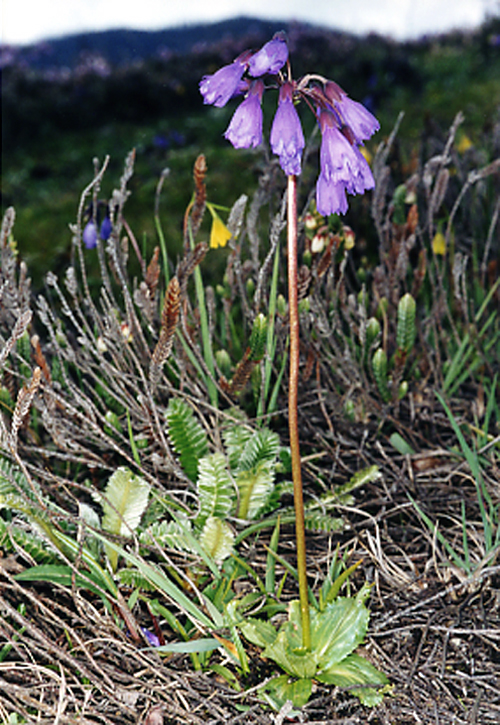 Primula amethystina
《Flora of China》|| Primulaceae || ||报春花属 Primula
8. Primula Linnaeus, Sp. Pl. 1: 142. 1753.
报春花属 bao chun hua shu
Credit: Harvard University Herbaria
Herbs perennial, rarely annual, glabrous or pubescent, often farinose. Leaves simple, forming a rosette. Flowers usually heterostylous with pin (with longer styles) and thrum (with shorter styles) flowers; sometimes homostylous, in umbellate, racemose, subcapitate, or spicate inflorescences on scapes, with bracts; rarely solitary, scapes undeveloped. Calyx campanulate or cylindric, sometimes leaflike, 5-toothed. Corolla tube cylindric, not constricted at throat; limb 5-lobed, spreading or campanulate; lobes 2-cleft, margin entire. Stamens inserted on corolla tube; filaments very short; anthers obtuse. Ovary superior. Capsule globose, ovoid, or cylindric, dehiscing by valves, rarely with an operculum or crumbling; seeds numerous.
Approximately 500 species, mostly indigenous to the N temperate zone, with only a few outliers on the mountainous regions of Africa (Ethiopia), tropical Asia (Java and Sumatra), and
South America. About 300 species are native to China.
Many species are imperfectly known, sometimes collected only once. This is reflected occasionally by missing details on pin or thrum morphology, fruiting characteristics, or ecology. ----------------------------------------------------------------- The 300 species are represented by 24 sections according to C. M. Hu:
1. Sect. Monocarpicae Franchet ex Pax: spp. 1--13.
2. Sect. Obconicolisteri I. B. Balfour: spp. 14--23.
3. Sect. Cortusoides I. B. Balfour: spp. 24--40.
4. Sect. Malvacea I. B. Balfour: spp. 41--47.
5. Sect. Auganthus (Link) Pax ex I. B. Balfour: spp. 48--50.
6. Sect. Pycnoloba I. B. Balfour: sp. 51.
7. Sect. Ranunculoides Chen & C. M. Hu: spp. 52--53.
8. Sect. Primula: sp. 54.
9. Sect. Carolinella (Hemsley) Pax: spp. 55--62.
10. Sect. Bullatae Pax: spp. 63--66.
11. Sect. Petiolares Pax: spp. 67--115.
12. Sect. Proliferae Pax: spp. 116--134.
13. Sect. Amethystina I. B. Balfour: spp. 135--142.
14. Sect. Sikkimensis I. B. Balfour: spp. 143--150.
15. Sect. Crystallophlomis Rupr.: spp. 151--191.
16. Sect. Cordifoliae Pax: spp. 192--196.
17. Sect. Aleuritia Duby: spp. 197--242.
Spp. 238--242 are recognized in Europe and North
America as Sect. Armerina.
18. Sect. Minutissimae Pax: spp. 243--259.
19. Sect. Souliei I. B. Balfour ex W. W. Smith & Forrest:
spp. 260--265.
20. Sect. Dryadifolia I. B. Balfour: spp. 266--268.
21. Sect. Denticulata Watt: spp. 269--274.
22. Sect. Capitatae Pax: spp. 275--276.
23. Sect. Muscarioides I. B. Balfour: spp. 277--289.
24. Sect. Soldanelloides Pax: spp. 290--300.

《Flora of China》|| Primulaceae || ||报春花属 Primula
8. Primula Linnaeus, Sp. Pl. 1: 142. 1753.
报春花属 bao chun hua shu
Credit: Harvard University Herbaria
Herbs perennial, rarely annual, glabrous or pubescent, often farinose. Leaves simple, forming a rosette. Flowers usually heterostylous with pin (with longer styles) and thrum (with shorter styles) flowers; sometimes homostylous, in umbellate, racemose, subcapitate, or spicate inflorescences on scapes, with bracts; rarely solitary, scapes undeveloped. Calyx campanulate or cylindric, sometimes leaflike, 5-toothed. Corolla tube cylindric, not constricted at throat; limb 5-lobed, spreading or campanulate; lobes 2-cleft, margin entire. Stamens inserted on corolla tube; filaments very short; anthers obtuse. Ovary superior. Capsule globose, ovoid, or cylindric, dehiscing by valves, rarely with an operculum or crumbling; seeds numerous.
Approximately 500 species, mostly indigenous to the N temperate zone, with only a few outliers on the mountainous regions of Africa (Ethiopia), tropical Asia (Java and Sumatra), and
South America. About 300 species are native to China.
Many species are imperfectly known, sometimes collected only once. This is reflected occasionally by missing details on pin or thrum morphology, fruiting characteristics, or ecology. ----------------------------------------------------------------- The 300 species are represented by 24 sections according to C. M. Hu:
1. Sect. Monocarpicae Franchet ex Pax: spp. 1--13.
2. Sect. Obconicolisteri I. B. Balfour: spp. 14--23.
3. Sect. Cortusoides I. B. Balfour: spp. 24--40.
4. Sect. Malvacea I. B. Balfour: spp. 41--47.
5. Sect. Auganthus (Link) Pax ex I. B. Balfour: spp. 48--50.
6. Sect. Pycnoloba I. B. Balfour: sp. 51.
7. Sect. Ranunculoides Chen & C. M. Hu: spp. 52--53.
8. Sect. Primula: sp. 54.
9. Sect. Carolinella (Hemsley) Pax: spp. 55--62.
10. Sect. Bullatae Pax: spp. 63--66.
11. Sect. Petiolares Pax: spp. 67--115.
12. Sect. Proliferae Pax: spp. 116--134.
13. Sect. Amethystina I. B. Balfour: spp. 135--142.
14. Sect. Sikkimensis I. B. Balfour: spp. 143--150.
15. Sect. Crystallophlomis Rupr.: spp. 151--191.
16. Sect. Cordifoliae Pax: spp. 192--196.
17. Sect. Aleuritia Duby: spp. 197--242.
Spp. 238--242 are recognized in Europe and North
America as Sect. Armerina.
18. Sect. Minutissimae Pax: spp. 243--259.
19. Sect. Souliei I. B. Balfour ex W. W. Smith & Forrest:
spp. 260--265.
20. Sect. Dryadifolia I. B. Balfour: spp. 266--268.
21. Sect. Denticulata Watt: spp. 269--274.
22. Sect. Capitatae Pax: spp. 275--276.
23. Sect. Muscarioides I. B. Balfour: spp. 277--289.
24. Sect. Soldanelloides Pax: spp. 290--300.

《Flora of China》|| Primulaceae || ||报春花属 Primula
8. Primula Linnaeus, Sp. Pl. 1: 142. 1753.
报春花属 bao chun hua shu
Credit: Harvard University Herbaria
Herbs perennial, rarely annual, glabrous or pubescent, often farinose. Leaves simple, forming a rosette. Flowers usually heterostylous with pin (with longer styles) and thrum (with shorter styles) flowers; sometimes homostylous, in umbellate, racemose, subcapitate, or spicate inflorescences on scapes, with bracts; rarely solitary, scapes undeveloped. Calyx campanulate or cylindric, sometimes leaflike, 5-toothed. Corolla tube cylindric, not constricted at throat; limb 5-lobed, spreading or campanulate; lobes 2-cleft, margin entire. Stamens inserted on corolla tube; filaments very short; anthers obtuse. Ovary superior. Capsule globose, ovoid, or cylindric, dehiscing by valves, rarely with an operculum or crumbling; seeds numerous.
Approximately 500 species, mostly indigenous to the N temperate zone, with only a few outliers on the mountainous regions of Africa (Ethiopia), tropical Asia (Java and Sumatra), and
South America. About 300 species are native to China.
Many species are imperfectly known, sometimes collected only once. This is reflected occasionally by missing details on pin or thrum morphology, fruiting characteristics, or ecology. ----------------------------------------------------------------- The 300 species are represented by 24 sections according to C. M. Hu:
1. Sect. Monocarpicae Franchet ex Pax: spp. 1--13.
2. Sect. Obconicolisteri I. B. Balfour: spp. 14--23.
3. Sect. Cortusoides I. B. Balfour: spp. 24--40.
4. Sect. Malvacea I. B. Balfour: spp. 41--47.
5. Sect. Auganthus (Link) Pax ex I. B. Balfour: spp. 48--50.
6. Sect. Pycnoloba I. B. Balfour: sp. 51.
7. Sect. Ranunculoides Chen & C. M. Hu: spp. 52--53.
8. Sect. Primula: sp. 54.
9. Sect. Carolinella (Hemsley) Pax: spp. 55--62.
10. Sect. Bullatae Pax: spp. 63--66.
11. Sect. Petiolares Pax: spp. 67--115.
12. Sect. Proliferae Pax: spp. 116--134.
13. Sect. Amethystina I. B. Balfour: spp. 135--142.
14. Sect. Sikkimensis I. B. Balfour: spp. 143--150.
15. Sect. Crystallophlomis Rupr.: spp. 151--191.
16. Sect. Cordifoliae Pax: spp. 192--196.
17. Sect. Aleuritia Duby: spp. 197--242.
Spp. 238--242 are recognized in Europe and North
America as Sect. Armerina.
18. Sect. Minutissimae Pax: spp. 243--259.
19. Sect. Souliei I. B. Balfour ex W. W. Smith & Forrest:
spp. 260--265.
20. Sect. Dryadifolia I. B. Balfour: spp. 266--268.
21. Sect. Denticulata Watt: spp. 269--274.
22. Sect. Capitatae Pax: spp. 275--276.
23. Sect. Muscarioides I. B. Balfour: spp. 277--289.
24. Sect. Soldanelloides Pax: spp. 290--300.

《Flora of China》|| Primulaceae || ||报春花属 Primula
8. Primula Linnaeus, Sp. Pl. 1: 142. 1753.
报春花属 bao chun hua shu
Credit: Harvard University Herbaria
Herbs perennial, rarely annual, glabrous or pubescent, often farinose. Leaves simple, forming a rosette. Flowers usually heterostylous with pin (with longer styles) and thrum (with shorter styles) flowers; sometimes homostylous, in umbellate, racemose, subcapitate, or spicate inflorescences on scapes, with bracts; rarely solitary, scapes undeveloped. Calyx campanulate or cylindric, sometimes leaflike, 5-toothed. Corolla tube cylindric, not constricted at throat; limb 5-lobed, spreading or campanulate; lobes 2-cleft, margin entire. Stamens inserted on corolla tube; filaments very short; anthers obtuse. Ovary superior. Capsule globose, ovoid, or cylindric, dehiscing by valves, rarely with an operculum or crumbling; seeds numerous.
Approximately 500 species, mostly indigenous to the N temperate zone, with only a few outliers on the mountainous regions of Africa (Ethiopia), tropical Asia (Java and Sumatra), and
South America. About 300 species are native to China.
Many species are imperfectly known, sometimes collected only once. This is reflected occasionally by missing details on pin or thrum morphology, fruiting characteristics, or ecology. ----------------------------------------------------------------- The 300 species are represented by 24 sections according to C. M. Hu:
1. Sect. Monocarpicae Franchet ex Pax: spp. 1--13.
2. Sect. Obconicolisteri I. B. Balfour: spp. 14--23.
3. Sect. Cortusoides I. B. Balfour: spp. 24--40.
4. Sect. Malvacea I. B. Balfour: spp. 41--47.
5. Sect. Auganthus (Link) Pax ex I. B. Balfour: spp. 48--50.
6. Sect. Pycnoloba I. B. Balfour: sp. 51.
7. Sect. Ranunculoides Chen & C. M. Hu: spp. 52--53.
8. Sect. Primula: sp. 54.
9. Sect. Carolinella (Hemsley) Pax: spp. 55--62.
10. Sect. Bullatae Pax: spp. 63--66.
11. Sect. Petiolares Pax: spp. 67--115.
12. Sect. Proliferae Pax: spp. 116--134.
13. Sect. Amethystina I. B. Balfour: spp. 135--142.
14. Sect. Sikkimensis I. B. Balfour: spp. 143--150.
15. Sect. Crystallophlomis Rupr.: spp. 151--191.
16. Sect. Cordifoliae Pax: spp. 192--196.
17. Sect. Aleuritia Duby: spp. 197--242.
Spp. 238--242 are recognized in Europe and North
America as Sect. Armerina.
18. Sect. Minutissimae Pax: spp. 243--259.
19. Sect. Souliei I. B. Balfour ex W. W. Smith & Forrest:
spp. 260--265.
20. Sect. Dryadifolia I. B. Balfour: spp. 266--268.
21. Sect. Denticulata Watt: spp. 269--274.
22. Sect. Capitatae Pax: spp. 275--276.
23. Sect. Muscarioides I. B. Balfour: spp. 277--289.
24. Sect. Soldanelloides Pax: spp. 290--300.

《Flora of China》|| Primulaceae || ||报春花属 Primula
8. Primula Linnaeus, Sp. Pl. 1: 142. 1753.
报春花属 bao chun hua shu
Credit: Harvard University Herbaria
Herbs perennial, rarely annual, glabrous or pubescent, often farinose. Leaves simple, forming a rosette. Flowers usually heterostylous with pin (with longer styles) and thrum (with shorter styles) flowers; sometimes homostylous, in umbellate, racemose, subcapitate, or spicate inflorescences on scapes, with bracts; rarely solitary, scapes undeveloped. Calyx campanulate or cylindric, sometimes leaflike, 5-toothed. Corolla tube cylindric, not constricted at throat; limb 5-lobed, spreading or campanulate; lobes 2-cleft, margin entire. Stamens inserted on corolla tube; filaments very short; anthers obtuse. Ovary superior. Capsule globose, ovoid, or cylindric, dehiscing by valves, rarely with an operculum or crumbling; seeds numerous.
Approximately 500 species, mostly indigenous to the N temperate zone, with only a few outliers on the mountainous regions of Africa (Ethiopia), tropical Asia (Java and Sumatra), and
South America. About 300 species are native to China.
Many species are imperfectly known, sometimes collected only once. This is reflected occasionally by missing details on pin or thrum morphology, fruiting characteristics, or ecology. ----------------------------------------------------------------- The 300 species are represented by 24 sections according to C. M. Hu:
1. Sect. Monocarpicae Franchet ex Pax: spp. 1--13.
2. Sect. Obconicolisteri I. B. Balfour: spp. 14--23.
3. Sect. Cortusoides I. B. Balfour: spp. 24--40.
4. Sect. Malvacea I. B. Balfour: spp. 41--47.
5. Sect. Auganthus (Link) Pax ex I. B. Balfour: spp. 48--50.
6. Sect. Pycnoloba I. B. Balfour: sp. 51.
7. Sect. Ranunculoides Chen & C. M. Hu: spp. 52--53.
8. Sect. Primula: sp. 54.
9. Sect. Carolinella (Hemsley) Pax: spp. 55--62.
10. Sect. Bullatae Pax: spp. 63--66.
11. Sect. Petiolares Pax: spp. 67--115.
12. Sect. Proliferae Pax: spp. 116--134.
13. Sect. Amethystina I. B. Balfour: spp. 135--142.
14. Sect. Sikkimensis I. B. Balfour: spp. 143--150.
15. Sect. Crystallophlomis Rupr.: spp. 151--191.
16. Sect. Cordifoliae Pax: spp. 192--196.
17. Sect. Aleuritia Duby: spp. 197--242.
Spp. 238--242 are recognized in Europe and North
America as Sect. Armerina.
18. Sect. Minutissimae Pax: spp. 243--259.
19. Sect. Souliei I. B. Balfour ex W. W. Smith & Forrest:
spp. 260--265.
20. Sect. Dryadifolia I. B. Balfour: spp. 266--268.
21. Sect. Denticulata Watt: spp. 269--274.
22. Sect. Capitatae Pax: spp. 275--276.
23. Sect. Muscarioides I. B. Balfour: spp. 277--289.
24. Sect. Soldanelloides Pax: spp. 290--300.

《Flora of China》|| Primulaceae || ||报春花属 Primula
8. Primula Linnaeus, Sp. Pl. 1: 142. 1753.
报春花属 bao chun hua shu
Herbs perennial, rarely annual, glabrous or pubescent, often farinose. Leaves simple, forming a rosette. Flowers usually heterostylous with pin (with longer styles) and thrum (with shorter styles) flowers; sometimes homostylous, in umbellate, racemose, subcapitate, or spicate inflorescences on scapes, with bracts; rarely solitary, scapes undeveloped. Calyx campanulate or cylindric, sometimes leaflike, 5-toothed. Corolla tube cylindric, not constricted at throat; limb 5-lobed, spreading or campanulate; lobes 2-cleft, margin entire. Stamens inserted on corolla tube; filaments very short; anthers obtuse. Ovary superior. Capsule globose, ovoid, or cylindric, dehiscing by valves, rarely with an operculum or crumbling; seeds numerous.
Approximately 500 species, mostly indigenous to the N temperate zone, with only a few outliers on the mountainous regions of Africa (Ethiopia), tropical Asia (Java and Sumatra), and
South America. About 300 species are native to China.
Many species are imperfectly known, sometimes collected only once. This is reflected occasionally by missing details on pin or thrum morphology, fruiting characteristics, or ecology. ----------------------------------------------------------------- The 300 species are represented by 24 sections according to C. M. Hu:
1. Sect. Monocarpicae Franchet ex Pax: spp. 1--13.
2. Sect. Obconicolisteri I. B. Balfour: spp. 14--23.
3. Sect. Cortusoides I. B. Balfour: spp. 24--40.
4. Sect. Malvacea I. B. Balfour: spp. 41--47.
5. Sect. Auganthus (Link) Pax ex I. B. Balfour: spp. 48--50.
6. Sect. Pycnoloba I. B. Balfour: sp. 51.
7. Sect. Ranunculoides Chen & C. M. Hu: spp. 52--53.
8. Sect. Primula: sp. 54.
9. Sect. Carolinella (Hemsley) Pax: spp. 55--62.
10. Sect. Bullatae Pax: spp. 63--66.
11. Sect. Petiolares Pax: spp. 67--115.
12. Sect. Proliferae Pax: spp. 116--134.
13. Sect. Amethystina I. B. Balfour: spp. 135--142.
14. Sect. Sikkimensis I. B. Balfour: spp. 143--150.
15. Sect. Crystallophlomis Rupr.: spp. 151--191.
16. Sect. Cordifoliae Pax: spp. 192--196.
17. Sect. Aleuritia Duby: spp. 197--242.
Spp. 238--242 are recognized in Europe and North
America as Sect. Armerina.
18. Sect. Minutissimae Pax: spp. 243--259.
19. Sect. Souliei I. B. Balfour ex W. W. Smith & Forrest:
spp. 260--265.
20. Sect. Dryadifolia I. B. Balfour: spp. 266--268.
21. Sect. Denticulata Watt: spp. 269--274.
22. Sect. Capitatae Pax: spp. 275--276.
23. Sect. Muscarioides I. B. Balfour: spp. 277--289.
24. Sect. Soldanelloides Pax: spp. 290--300.
Primula secundiflora
Image File
《Flora of China》|| Primulaceae || ||报春花属 Primula
8. Primula Linnaeus, Sp. Pl. 1: 142. 1753.
报春花属 bao chun hua shu
Credit: Harvard University Herbaria
Herbs perennial, rarely annual, glabrous or pubescent, often farinose. Leaves simple, forming a rosette. Flowers usually heterostylous with pin (with longer styles) and thrum (with shorter styles) flowers; sometimes homostylous, in umbellate, racemose, subcapitate, or spicate inflorescences on scapes, with bracts; rarely solitary, scapes undeveloped. Calyx campanulate or cylindric, sometimes leaflike, 5-toothed. Corolla tube cylindric, not constricted at throat; limb 5-lobed, spreading or campanulate; lobes 2-cleft, margin entire. Stamens inserted on corolla tube; filaments very short; anthers obtuse. Ovary superior. Capsule globose, ovoid, or cylindric, dehiscing by valves, rarely with an operculum or crumbling; seeds numerous.
Approximately 500 species, mostly indigenous to the N temperate zone, with only a few outliers on the mountainous regions of Africa (Ethiopia), tropical Asia (Java and Sumatra), and
South America. About 300 species are native to China.
Many species are imperfectly known, sometimes collected only once. This is reflected occasionally by missing details on pin or thrum morphology, fruiting characteristics, or ecology. ----------------------------------------------------------------- The 300 species are represented by 24 sections according to C. M. Hu:
1. Sect. Monocarpicae Franchet ex Pax: spp. 1--13.
2. Sect. Obconicolisteri I. B. Balfour: spp. 14--23.
3. Sect. Cortusoides I. B. Balfour: spp. 24--40.
4. Sect. Malvacea I. B. Balfour: spp. 41--47.
5. Sect. Auganthus (Link) Pax ex I. B. Balfour: spp. 48--50.
6. Sect. Pycnoloba I. B. Balfour: sp. 51.
7. Sect. Ranunculoides Chen & C. M. Hu: spp. 52--53.
8. Sect. Primula: sp. 54.
9. Sect. Carolinella (Hemsley) Pax: spp. 55--62.
10. Sect. Bullatae Pax: spp. 63--66.
11. Sect. Petiolares Pax: spp. 67--115.
12. Sect. Proliferae Pax: spp. 116--134.
13. Sect. Amethystina I. B. Balfour: spp. 135--142.
14. Sect. Sikkimensis I. B. Balfour: spp. 143--150.
15. Sect. Crystallophlomis Rupr.: spp. 151--191.
16. Sect. Cordifoliae Pax: spp. 192--196.
17. Sect. Aleuritia Duby: spp. 197--242.
Spp. 238--242 are recognized in Europe and North
America as Sect. Armerina.
18. Sect. Minutissimae Pax: spp. 243--259.
19. Sect. Souliei I. B. Balfour ex W. W. Smith & Forrest:
spp. 260--265.
20. Sect. Dryadifolia I. B. Balfour: spp. 266--268.
21. Sect. Denticulata Watt: spp. 269--274.
22. Sect. Capitatae Pax: spp. 275--276.
23. Sect. Muscarioides I. B. Balfour: spp. 277--289.
24. Sect. Soldanelloides Pax: spp. 290--300.
《Flora of China》|| Primulaceae || ||报春花属 Primula
8. Primula Linnaeus, Sp. Pl. 1: 142. 1753.
报春花属 bao chun hua shu
Credit: Harvard University Herbaria
Herbs perennial, rarely annual, glabrous or pubescent, often farinose. Leaves simple, forming a rosette. Flowers usually heterostylous with pin (with longer styles) and thrum (with shorter styles) flowers; sometimes homostylous, in umbellate, racemose, subcapitate, or spicate inflorescences on scapes, with bracts; rarely solitary, scapes undeveloped. Calyx campanulate or cylindric, sometimes leaflike, 5-toothed. Corolla tube cylindric, not constricted at throat; limb 5-lobed, spreading or campanulate; lobes 2-cleft, margin entire. Stamens inserted on corolla tube; filaments very short; anthers obtuse. Ovary superior. Capsule globose, ovoid, or cylindric, dehiscing by valves, rarely with an operculum or crumbling; seeds numerous.
Approximately 500 species, mostly indigenous to the N temperate zone, with only a few outliers on the mountainous regions of Africa (Ethiopia), tropical Asia (Java and Sumatra), and
South America. About 300 species are native to China.
Many species are imperfectly known, sometimes collected only once. This is reflected occasionally by missing details on pin or thrum morphology, fruiting characteristics, or ecology. ----------------------------------------------------------------- The 300 species are represented by 24 sections according to C. M. Hu:
1. Sect. Monocarpicae Franchet ex Pax: spp. 1--13.
2. Sect. Obconicolisteri I. B. Balfour: spp. 14--23.
3. Sect. Cortusoides I. B. Balfour: spp. 24--40.
4. Sect. Malvacea I. B. Balfour: spp. 41--47.
5. Sect. Auganthus (Link) Pax ex I. B. Balfour: spp. 48--50.
6. Sect. Pycnoloba I. B. Balfour: sp. 51.
7. Sect. Ranunculoides Chen & C. M. Hu: spp. 52--53.
8. Sect. Primula: sp. 54.
9. Sect. Carolinella (Hemsley) Pax: spp. 55--62.
10. Sect. Bullatae Pax: spp. 63--66.
11. Sect. Petiolares Pax: spp. 67--115.
12. Sect. Proliferae Pax: spp. 116--134.
13. Sect. Amethystina I. B. Balfour: spp. 135--142.
14. Sect. Sikkimensis I. B. Balfour: spp. 143--150.
15. Sect. Crystallophlomis Rupr.: spp. 151--191.
16. Sect. Cordifoliae Pax: spp. 192--196.
17. Sect. Aleuritia Duby: spp. 197--242.
Spp. 238--242 are recognized in Europe and North
America as Sect. Armerina.
18. Sect. Minutissimae Pax: spp. 243--259.
19. Sect. Souliei I. B. Balfour ex W. W. Smith & Forrest:
spp. 260--265.
20. Sect. Dryadifolia I. B. Balfour: spp. 266--268.
21. Sect. Denticulata Watt: spp. 269--274.
22. Sect. Capitatae Pax: spp. 275--276.
23. Sect. Muscarioides I. B. Balfour: spp. 277--289.
24. Sect. Soldanelloides Pax: spp. 290--300.
《Flora of China》|| Primulaceae || ||报春花属 Primula
8. Primula Linnaeus, Sp. Pl. 1: 142. 1753.
报春花属 bao chun hua shu
Credit: Harvard University Herbaria
Herbs perennial, rarely annual, glabrous or pubescent, often farinose. Leaves simple, forming a rosette. Flowers usually heterostylous with pin (with longer styles) and thrum (with shorter styles) flowers; sometimes homostylous, in umbellate, racemose, subcapitate, or spicate inflorescences on scapes, with bracts; rarely solitary, scapes undeveloped. Calyx campanulate or cylindric, sometimes leaflike, 5-toothed. Corolla tube cylindric, not constricted at throat; limb 5-lobed, spreading or campanulate; lobes 2-cleft, margin entire. Stamens inserted on corolla tube; filaments very short; anthers obtuse. Ovary superior. Capsule globose, ovoid, or cylindric, dehiscing by valves, rarely with an operculum or crumbling; seeds numerous.
Approximately 500 species, mostly indigenous to the N temperate zone, with only a few outliers on the mountainous regions of Africa (Ethiopia), tropical Asia (Java and Sumatra), and
South America. About 300 species are native to China.
Many species are imperfectly known, sometimes collected only once. This is reflected occasionally by missing details on pin or thrum morphology, fruiting characteristics, or ecology. ----------------------------------------------------------------- The 300 species are represented by 24 sections according to C. M. Hu:
1. Sect. Monocarpicae Franchet ex Pax: spp. 1--13.
2. Sect. Obconicolisteri I. B. Balfour: spp. 14--23.
3. Sect. Cortusoides I. B. Balfour: spp. 24--40.
4. Sect. Malvacea I. B. Balfour: spp. 41--47.
5. Sect. Auganthus (Link) Pax ex I. B. Balfour: spp. 48--50.
6. Sect. Pycnoloba I. B. Balfour: sp. 51.
7. Sect. Ranunculoides Chen & C. M. Hu: spp. 52--53.
8. Sect. Primula: sp. 54.
9. Sect. Carolinella (Hemsley) Pax: spp. 55--62.
10. Sect. Bullatae Pax: spp. 63--66.
11. Sect. Petiolares Pax: spp. 67--115.
12. Sect. Proliferae Pax: spp. 116--134.
13. Sect. Amethystina I. B. Balfour: spp. 135--142.
14. Sect. Sikkimensis I. B. Balfour: spp. 143--150.
15. Sect. Crystallophlomis Rupr.: spp. 151--191.
16. Sect. Cordifoliae Pax: spp. 192--196.
17. Sect. Aleuritia Duby: spp. 197--242.
Spp. 238--242 are recognized in Europe and North
America as Sect. Armerina.
18. Sect. Minutissimae Pax: spp. 243--259.
19. Sect. Souliei I. B. Balfour ex W. W. Smith & Forrest:
spp. 260--265.
20. Sect. Dryadifolia I. B. Balfour: spp. 266--268.
21. Sect. Denticulata Watt: spp. 269--274.
22. Sect. Capitatae Pax: spp. 275--276.
23. Sect. Muscarioides I. B. Balfour: spp. 277--289.
24. Sect. Soldanelloides Pax: spp. 290--300.
《Flora of China》|| Primulaceae || ||报春花属 Primula
8. Primula Linnaeus, Sp. Pl. 1: 142. 1753.
报春花属 bao chun hua shu
Credit: Harvard University Herbaria
Herbs perennial, rarely annual, glabrous or pubescent, often farinose. Leaves simple, forming a rosette. Flowers usually heterostylous with pin (with longer styles) and thrum (with shorter styles) flowers; sometimes homostylous, in umbellate, racemose, subcapitate, or spicate inflorescences on scapes, with bracts; rarely solitary, scapes undeveloped. Calyx campanulate or cylindric, sometimes leaflike, 5-toothed. Corolla tube cylindric, not constricted at throat; limb 5-lobed, spreading or campanulate; lobes 2-cleft, margin entire. Stamens inserted on corolla tube; filaments very short; anthers obtuse. Ovary superior. Capsule globose, ovoid, or cylindric, dehiscing by valves, rarely with an operculum or crumbling; seeds numerous.
Approximately 500 species, mostly indigenous to the N temperate zone, with only a few outliers on the mountainous regions of Africa (Ethiopia), tropical Asia (Java and Sumatra), and
South America. About 300 species are native to China.
Many species are imperfectly known, sometimes collected only once. This is reflected occasionally by missing details on pin or thrum morphology, fruiting characteristics, or ecology. ----------------------------------------------------------------- The 300 species are represented by 24 sections according to C. M. Hu:
1. Sect. Monocarpicae Franchet ex Pax: spp. 1--13.
2. Sect. Obconicolisteri I. B. Balfour: spp. 14--23.
3. Sect. Cortusoides I. B. Balfour: spp. 24--40.
4. Sect. Malvacea I. B. Balfour: spp. 41--47.
5. Sect. Auganthus (Link) Pax ex I. B. Balfour: spp. 48--50.
6. Sect. Pycnoloba I. B. Balfour: sp. 51.
7. Sect. Ranunculoides Chen & C. M. Hu: spp. 52--53.
8. Sect. Primula: sp. 54.
9. Sect. Carolinella (Hemsley) Pax: spp. 55--62.
10. Sect. Bullatae Pax: spp. 63--66.
11. Sect. Petiolares Pax: spp. 67--115.
12. Sect. Proliferae Pax: spp. 116--134.
13. Sect. Amethystina I. B. Balfour: spp. 135--142.
14. Sect. Sikkimensis I. B. Balfour: spp. 143--150.
15. Sect. Crystallophlomis Rupr.: spp. 151--191.
16. Sect. Cordifoliae Pax: spp. 192--196.
17. Sect. Aleuritia Duby: spp. 197--242.
Spp. 238--242 are recognized in Europe and North
America as Sect. Armerina.
18. Sect. Minutissimae Pax: spp. 243--259.
19. Sect. Souliei I. B. Balfour ex W. W. Smith & Forrest:
spp. 260--265.
20. Sect. Dryadifolia I. B. Balfour: spp. 266--268.
21. Sect. Denticulata Watt: spp. 269--274.
22. Sect. Capitatae Pax: spp. 275--276.
23. Sect. Muscarioides I. B. Balfour: spp. 277--289.
24. Sect. Soldanelloides Pax: spp. 290--300.
《Flora of China》|| Primulaceae || ||报春花属 Primula
8. Primula Linnaeus, Sp. Pl. 1: 142. 1753.
报春花属 bao chun hua shu
Credit: Harvard University Herbaria
Herbs perennial, rarely annual, glabrous or pubescent, often farinose. Leaves simple, forming a rosette. Flowers usually heterostylous with pin (with longer styles) and thrum (with shorter styles) flowers; sometimes homostylous, in umbellate, racemose, subcapitate, or spicate inflorescences on scapes, with bracts; rarely solitary, scapes undeveloped. Calyx campanulate or cylindric, sometimes leaflike, 5-toothed. Corolla tube cylindric, not constricted at throat; limb 5-lobed, spreading or campanulate; lobes 2-cleft, margin entire. Stamens inserted on corolla tube; filaments very short; anthers obtuse. Ovary superior. Capsule globose, ovoid, or cylindric, dehiscing by valves, rarely with an operculum or crumbling; seeds numerous.
Approximately 500 species, mostly indigenous to the N temperate zone, with only a few outliers on the mountainous regions of Africa (Ethiopia), tropical Asia (Java and Sumatra), and
South America. About 300 species are native to China.
Many species are imperfectly known, sometimes collected only once. This is reflected occasionally by missing details on pin or thrum morphology, fruiting characteristics, or ecology. ----------------------------------------------------------------- The 300 species are represented by 24 sections according to C. M. Hu:
1. Sect. Monocarpicae Franchet ex Pax: spp. 1--13.
2. Sect. Obconicolisteri I. B. Balfour: spp. 14--23.
3. Sect. Cortusoides I. B. Balfour: spp. 24--40.
4. Sect. Malvacea I. B. Balfour: spp. 41--47.
5. Sect. Auganthus (Link) Pax ex I. B. Balfour: spp. 48--50.
6. Sect. Pycnoloba I. B. Balfour: sp. 51.
7. Sect. Ranunculoides Chen & C. M. Hu: spp. 52--53.
8. Sect. Primula: sp. 54.
9. Sect. Carolinella (Hemsley) Pax: spp. 55--62.
10. Sect. Bullatae Pax: spp. 63--66.
11. Sect. Petiolares Pax: spp. 67--115.
12. Sect. Proliferae Pax: spp. 116--134.
13. Sect. Amethystina I. B. Balfour: spp. 135--142.
14. Sect. Sikkimensis I. B. Balfour: spp. 143--150.
15. Sect. Crystallophlomis Rupr.: spp. 151--191.
16. Sect. Cordifoliae Pax: spp. 192--196.
17. Sect. Aleuritia Duby: spp. 197--242.
Spp. 238--242 are recognized in Europe and North
America as Sect. Armerina.
18. Sect. Minutissimae Pax: spp. 243--259.
19. Sect. Souliei I. B. Balfour ex W. W. Smith & Forrest:
spp. 260--265.
20. Sect. Dryadifolia I. B. Balfour: spp. 266--268.
21. Sect. Denticulata Watt: spp. 269--274.
22. Sect. Capitatae Pax: spp. 275--276.
23. Sect. Muscarioides I. B. Balfour: spp. 277--289.
24. Sect. Soldanelloides Pax: spp. 290--300.
| 标题 | 作者 | 期刊 | 日期 |
|---|---|---|---|
| Unique Ornamental Plant Genetic Resources and Breeding in China | Zhang, Qi-Xiang; Pan, Hui-Tang; Sun, Ming; Yang, Wei-Yu; Wang, Jia | XXVIII INTERNATIONAL HORTICULTURAL CONGRESS ON SCIENCE AND HORTICULTURE FOR PEOPLE (IHC2010): INTERNATIONAL SYMPOSIUM ON ADVANCES IN ORNAMENTALS, LANDSCAPE AND URBAN HORTICULTURE | 2012 |
| Medicinal plant resources and their diversity analysis in Chengkou county as the type locality,Chongqing | Zheng Yueyue; Rao Dongsheng; Zhao Zhengwu; Liu Yan | Journal of Biology | 2018 |


版权所有 Copyright © 2002-2025 中国科学院昆明植物研究所,All Rights Reserved 【滇ICP备05000394号】
地址:中国云南省昆明市蓝黑路132号 邮政编码:650201 点击这里联系我们
